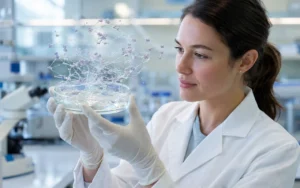

The end of animal testing has long been a goal pursued by researchers, regulatory authorities and animal welfare organizations. For decades, animal models have been a critical step in the development of medicines and medical devices, particularly to assess the safety and efficacy of new therapies.
However, recent advances in artificial intelligence (AI) and advanced biotechnologies are accelerating the end of animal testing. New scientific approaches now make it possible to gradually replace certain animal models with alternative methods that are often more predictive and closer to human physiology.
End of animal testing: a goal supported by scientific authorities
The end of animal testing is part of a broader evolution of scientific and regulatory policies. In Europe, research involving animals is governed by the directive on the protection of animals used for scientific purposes:
https://environment.ec.europa.eu/topics/chemicals/animals-science_en
This directive is based on the 3Rs principle, which aims to:
- Replace animals whenever alternative methods exist
- Reduce the number of animals used
- Refine experimental protocols to minimize animal suffering
These principles are now central to strategies supporting the end of animal testing in biomedical research.
Artificial intelligence is accelerating the end of animal testing
One of the main drivers of the end of animal testing is the rapid development of artificial intelligence in pharmaceutical and biotechnology research.
Machine learning algorithms can now:
- predict the toxicity of molecules
- identify potential drug candidates faster
- model interactions between substances and biological systems
These tools rely on the analysis of large biological and pharmacological datasets. In some cases, artificial intelligence can predict the effects of a drug even before the first in vivo experiments.
The end of animal testing is also supported by European regulation, including Directive 2010/63/EU, which aims to limit animal use and promote alternative methods:
https://eur-lex.europa.eu/legal-content/FR/TXT/?uri=CELEX:32010L0063
Organoids and organ-on-chip technologies: promising alternatives
Advances in biotechnology are also contributing to the end of animal testing.
Among the most promising innovations are:
- organoids, mini-organs grown in the laboratory from human cells
- organ-on-chip systems, microdevices capable of reproducing human physiological functions
These technologies make it possible to replicate biological processes in vitro with a level of precision that can sometimes exceed animal models.
Organ-on-chip systems can simulate the function of:
- the liver
- the heart
- the lungs
- the blood-brain barrier
These experimental models provide researchers with more relevant tools to assess the safety and efficacy of new therapies, further supporting the end of animal testing.
https://www.sciencedirect.com/science/article/abs/pii/S1934590925004564
End of animal testing: a gradual transformation of research
Despite these scientific advances, the end of animal testing will not happen overnight.
In many areas, regulatory authorities still require data from animal studies to demonstrate the safety of a medicine before clinical trials.
However, research is rapidly evolving toward combined approaches using:
- computational modeling
- advanced cell cultures
- organoids
- organ-on-chip technologies
- large-scale biological data analysis
Regulatory agencies are closely monitoring these developments in order to progressively integrate these alternative methods into evaluation processes:
Toward a new scientific paradigm
The end of animal testing represents a major scientific, technological and ethical challenge. Advances in artificial intelligence and biotechnology are enabling the development of experimental models that are more representative of human biology.
Beyond ethical considerations, these approaches may also improve the predictive value of preclinical studies, as results observed in animals do not always translate to humans.
In this context, the rise of AI, organoids and organ-on-chip technologies could profoundly transform biomedical research and significantly accelerate the end of animal testing.
The end of animal testing is therefore not only an ethical objective, but also a scientific opportunity to improve the reliability and efficiency of drug development in the coming years.
As these technologies continue to evolve, they are expected to play an increasingly central role in regulatory science and innovation strategies, further supporting the global transition toward the end of animal testing.